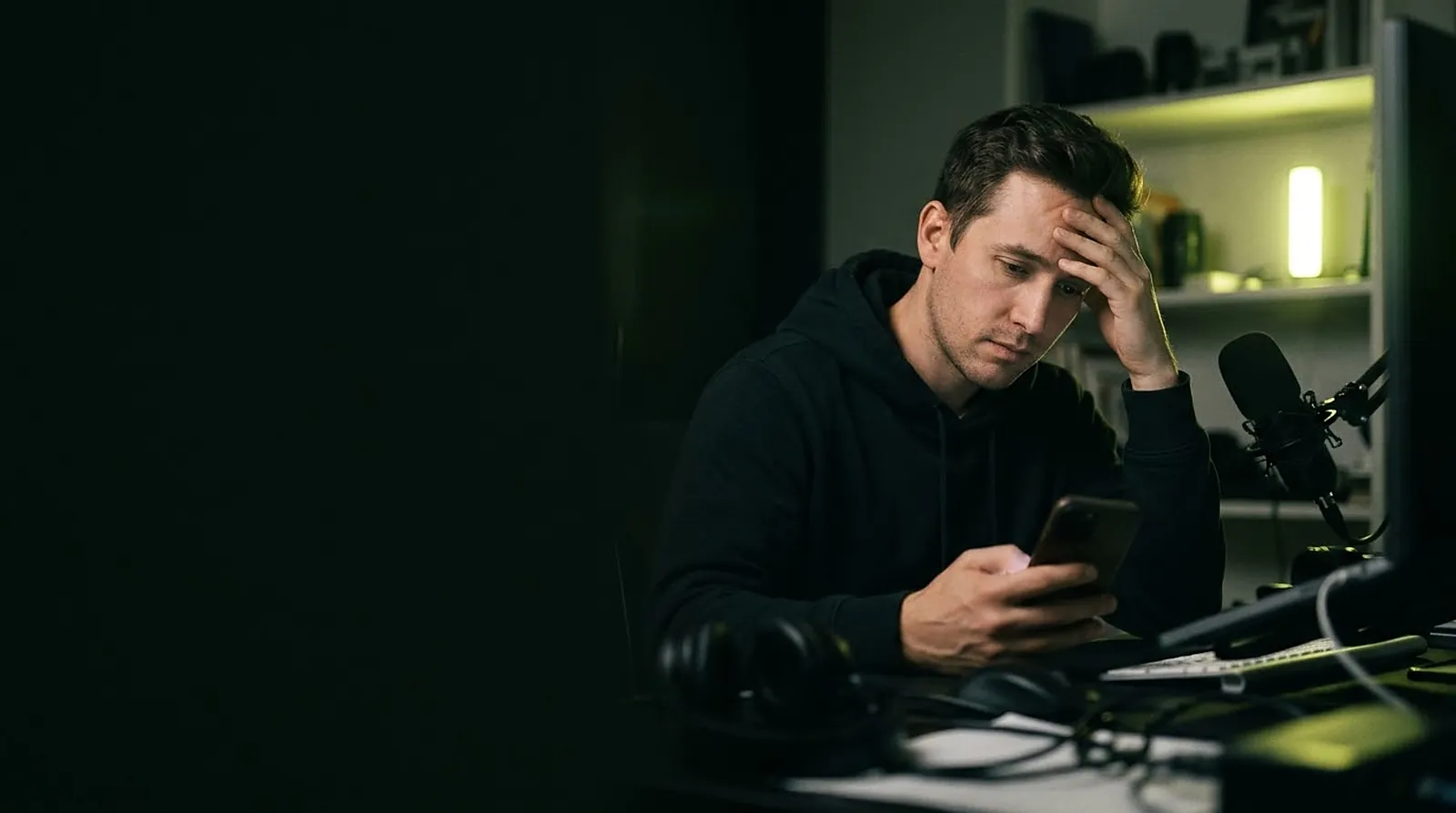
A copyright strike isn’t the end of your channel.
If your content was removed for copyright by mistake, the law gives you a way back. We review the notice, ask the claimant to retract where it fits, and prepare a counter-notification for you to sign. We never ask for your login.
Strikes stack. Mistaken ones still count.
Platforms must keep repeat-infringer policies to keep their legal safe harbor. That’s why one wrong claim can push a channel toward termination.
Your options are the same everywhere: wait it out, get a retraction, or file a valid counter-notification. Each has a cost. We lay them out for your case before you choose.
What we file, and where
What we need, and what we won’t do.
Being clear up front keeps notices valid and keeps you out of trouble. If your situation isn’t a copyright case, we’ll say so at the free check.
- The platform’s noticeThe email or dashboard message, unedited.
- Proof the content was yours or licensedProject files, license receipts, contracts.
- A short account of what happenedWhere the content came from and when.
- Your signature on the final counter-noticeYou sign it, because the statements are yours.
- Guarantee reinstatementOnly the platform can reinstate.
- Bans for other reasonsSpam, security or guideline bans go through the platform’s appeal.
- Fight a claim on content you had no rights toWe’ll tell you a counter-notice could backfire.
$149 per removal. Quote first, pay second.
The free check tells you whether it’s eligible and exactly what it costs. You pay only after you approve the quote and sign the authorization.
What creators ask about Strike defense.
The first sentence answers the question. Sources link to the platform’s own policy or the law. All answers
A copyright strike is a penalty a platform puts on an account after removing content in response to a legal copyright removal request it judged valid.
Strikes count toward a platform’s repeat-infringer limit. On YouTube and Twitch, three strikes lead to termination. They are different from automatic matches such as YouTube Content ID claims.
YouTube lists three ways: complete Copyright School and wait 90 days, get the claimant to retract the request, or submit a valid counter-notification if the removal was a mistake or fair use.
Deleting the video doesn’t remove the strike, with one exception: if the request was scheduled, you have 7 days to delete the video and avoid the strike. Check the email from no-reply@youtube.com to see which applies. Our Strike Defense Case prepares the retraction request or counter-notification for you to review and sign.
Yes, a YouTube copyright strike expires after 90 days if you complete Copyright School and your channel has fewer than 3 strikes.
If you skip Copyright School, the strike stays active. You can also clear a strike early with a retraction from the claimant or a valid counter-notification.
Usually not. On YouTube, deleting a video doesn’t resolve a copyright strike unless the removal request was scheduled, which gives you 7 days to delete it and avoid the strike.
Check the strike email from no-reply@youtube.com for the word “scheduled” before deleting anything. Deleting can also throw away evidence you need for a counter-notification.
Ask the copyright owner to retract the report, or submit an appeal from the in-app notification, which works as a DMCA counter-notification.
Act quickly: TikTok deletes removed content after a period of time, and after that it can’t be reinstated. TikTok may forward your whole appeal, including contact details, to the person who reported you, and they could use it to sue. TikTok may reinstate the video unless the reporter tells TikTok they have filed for a court order.
Possibly. Instagram processes DMCA counter-notifications for content removed by mistake, and the rights owner can also retract their report.
A counter-notification is a sworn statement, so only file one if you believe the removal was a mistake or the use was lawful. Restorations count in your favor under Instagram’s repeat-infringer policy.
It can be. A counter-notification is sworn under penalty of perjury, includes your contact details and consent to a court’s jurisdiction, and the claimant may use it to sue you.
File one only if you believe the removal was a mistake or the use was lawful. If the claimant really owns what you used and you had no license, a retraction request or simply waiting out the strike is often safer. We prepare counter-notifications for you to review and sign. You sign them, not us, because the statements are yours.
No one outside the platform can promise reinstatement. If the ban came from copyright strikes, we can prepare retraction requests and counter-notifications through the platform’s official channels.
We never ask for your password, one-time codes or backup codes, and we don’t claim insider contacts at any platform. Treat anyone who does as a red flag.
Hit with a strike? Start with a free check.
We’ll tell you which route it takes. The free case check takes about three minutes, and a person replies within one business day with a fixed quote or an honest no.